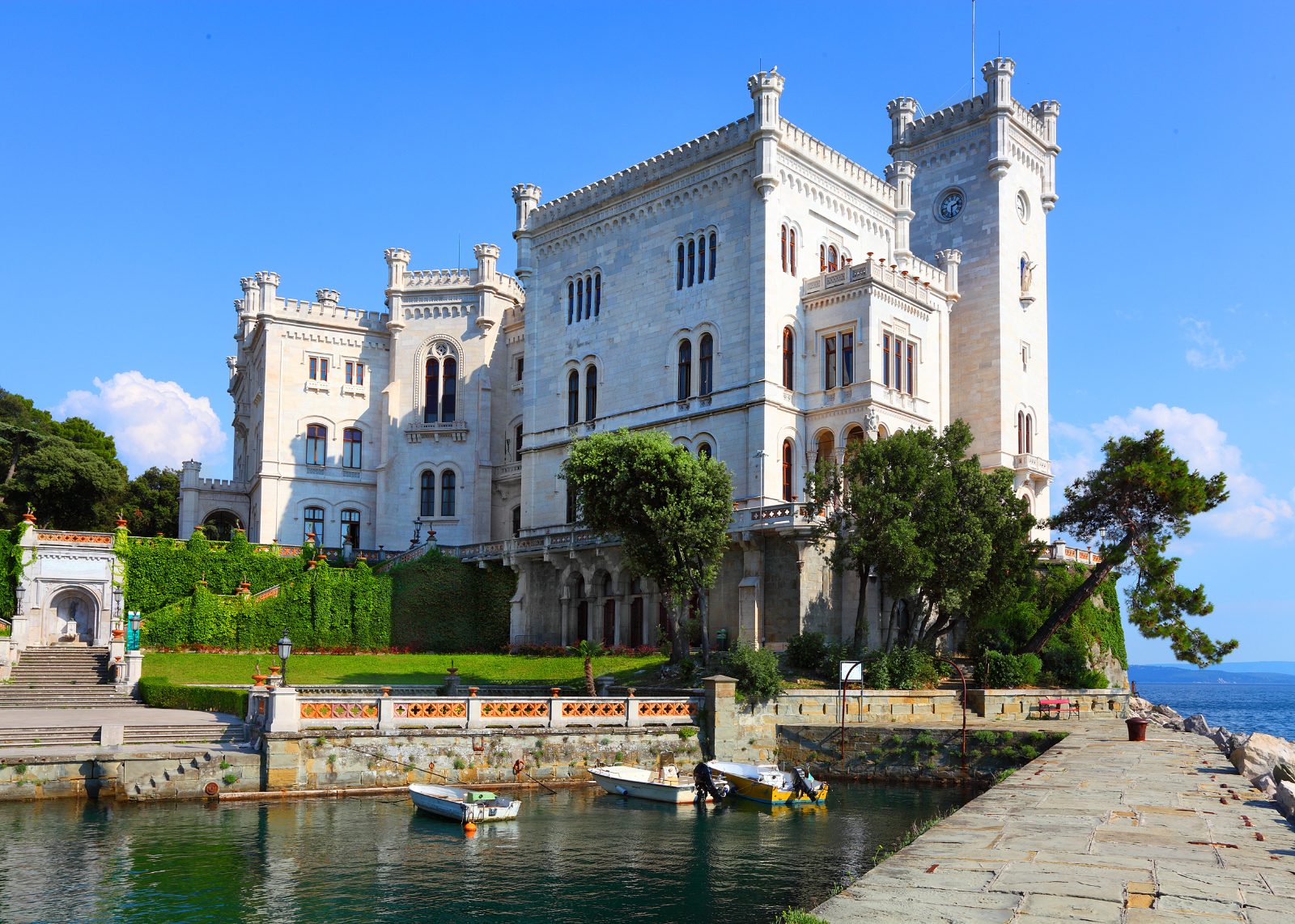
Miramare Castle
Built for Archduke Ferdinand Maximilian of Austria, this 19th-century residence features interiors preserved in their original state and a sprawling park.
View the white facade from the garden terrace for bay perspectives.

Trieste sits at the hinge of Italy, Slovenia, and the Adriatic, a port city built by Vienna and claimed by Rome. The question travelers ask when planning a Slovenian Coast itinerary is whether its Habsburg palaces, harborside cafés, and clifftop castle justify a detour. The answer depends on how much time you have and what you value in a city.
Quick answer
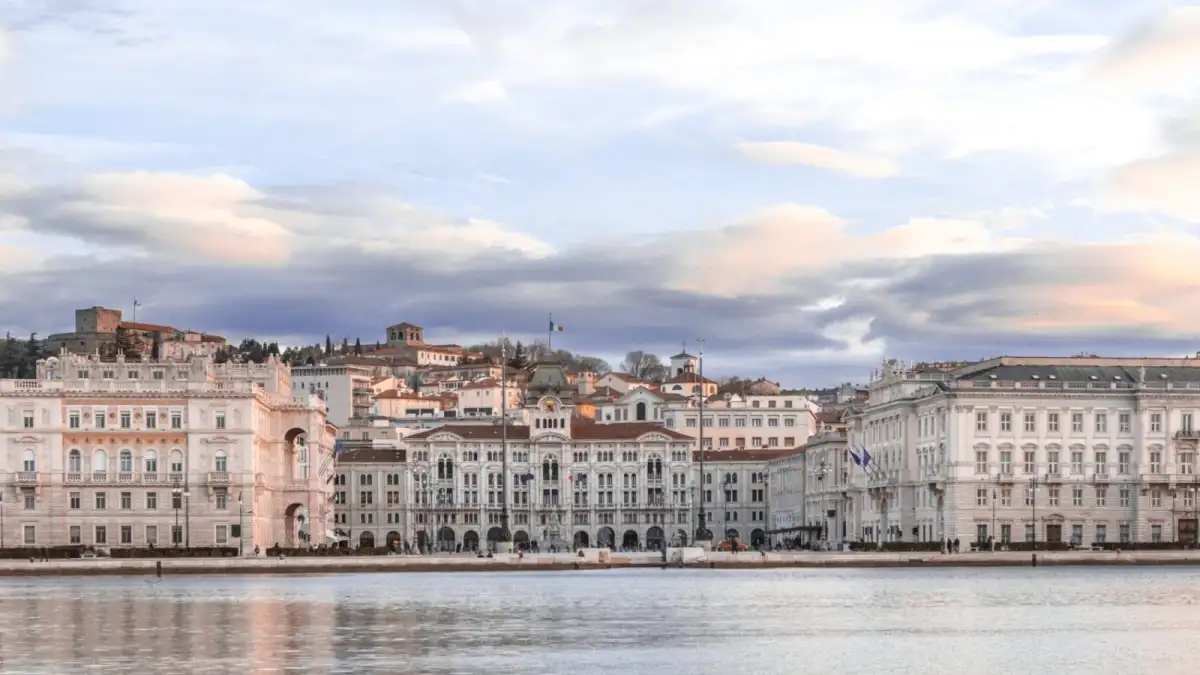
Yes, Trieste is worth visiting if you have at least six hours to spare on a Slovenian Coast trip. The city delivers a distinct Mitteleuropa atmosphere absent from Piran or Portorož, with Miramare Castle open daily from 09:00 to 19:00 at 17 EUR, monumental Piazza Unità d'Italia facing the sea, and a café culture rooted in its role as the Austro-Hungarian Empire's only warm-water port.
Trieste was the fourth-largest city of the Habsburg Empire, and that history shows in every boulevard and coffee house. While Piran preserves Venetian compactness, Trieste sprawls with neoclassical grandeur—wide streets laid out for imperial processions, not medieval carts. The city remained under Austrian control until 1918, then spent decades in territorial limbo before becoming definitively Italian in 1954. That layered identity makes it feel less purely Italian than any other Adriatic city. The harbor district anchors the experience. Piazza Unità d'Italia ranks among Europe's largest sea-facing squares, framed by Austro-Hungarian civic buildings and open to the Adriatic on one side. The promenade stretches north toward the Miramare promontory, where Archduke Maximilian built a white castle above the gulf before leaving for his fatal reign in Mexico. The interiors preserve his botanical library and Gobelin tapestries, and the cliff-edge park alone justifies the journey if you arrive during the optimal morning window. Visiting Trieste makes practical sense for anyone traveling between Ljubljana and Venice or adding a second day to a Piran base. The city lies 30 kilometers from the Slovenian border and connects by direct bus and train to both countries. Unlike coastal resorts, Trieste functions as a working port and regional capital, so services and restaurants operate year-round without the seasonal closures common in smaller towns. The café tradition remains unmatched—Caffè San Marco and Caffè Tommaseo have poured espresso since the 1800s, and the illy and Hausbrandt roasteries both call Trieste home. Whether exploring Trieste rewards your time depends on your itinerary shape. A single overnight in Piran leaves little margin for a side trip. A three-day Slovenian Coast stay creates space for a full Trieste day without sacrificing beach time or the coastal villages. The city does not compete with Piran's medieval charm; it complements it with scale, history, and a Central European sensibility that vanishes once you cross back into Slovenia.
“Trieste was the fourth-largest city of the Habsburg Empire, and that history shows in every boulevard and coffee house.”
Trieste sits less than 30 minutes from the Slovenian border, making it an easy addition to a coastal trip without the commitment of a separate destination. This plan covers a half-day loop through the city's Habsburg core and waterfront, leaving the afternoon open for Piran or the return journey.
Start at Europe's largest sea-facing square, framed by neoclassical palaces and the Adriatic. The morning light hits the marble facades cleanly, and the cafés are just opening.
Climb to the hilltop fortress for a view over the port and the Karst plateau. The interior museum is compact; budget 30 minutes inside, then walk the ramparts.
Drop back through the narrow streets past the 1st-century theatre, still half-embedded in the hillside. Stop at a traditional osmiza or buffet for coffee and a pastry.
Walk the canal district where Joyce lived and worked. The covered market at Via Carducci runs until early afternoon and stocks Istrian truffles, olive oil, and local wine.
If time allows, take the bus 20 minutes north to the white clifftop castle. The park and sea terrace are free; the interior requires a ticket and an hour.
Trieste offers a distinct architectural synthesis where Central European grandeur meets Mediterranean maritime history. These landmark sites illustrate the city's complex heritage and strategic importance on the Adriatic coast.
Built for Archduke Ferdinand Maximilian of Austria, this 19th-century residence features interiors preserved in their original state and a sprawling park.
View the white facade from the garden terrace for bay perspectives.
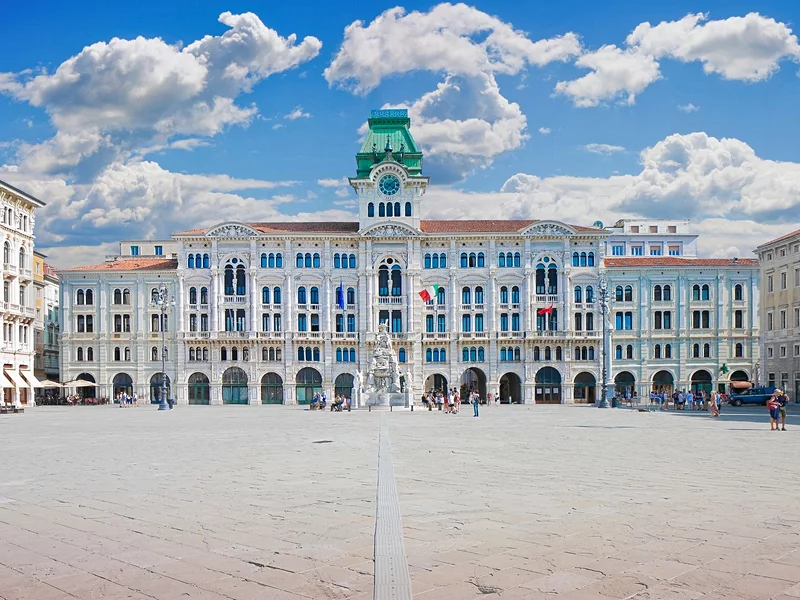
As the largest sea-facing square in Europe, it is flanked by grand administrative buildings reflecting the city's Hapsburg-era prominence.
Walk toward the waterfront at dusk to see the city lights.
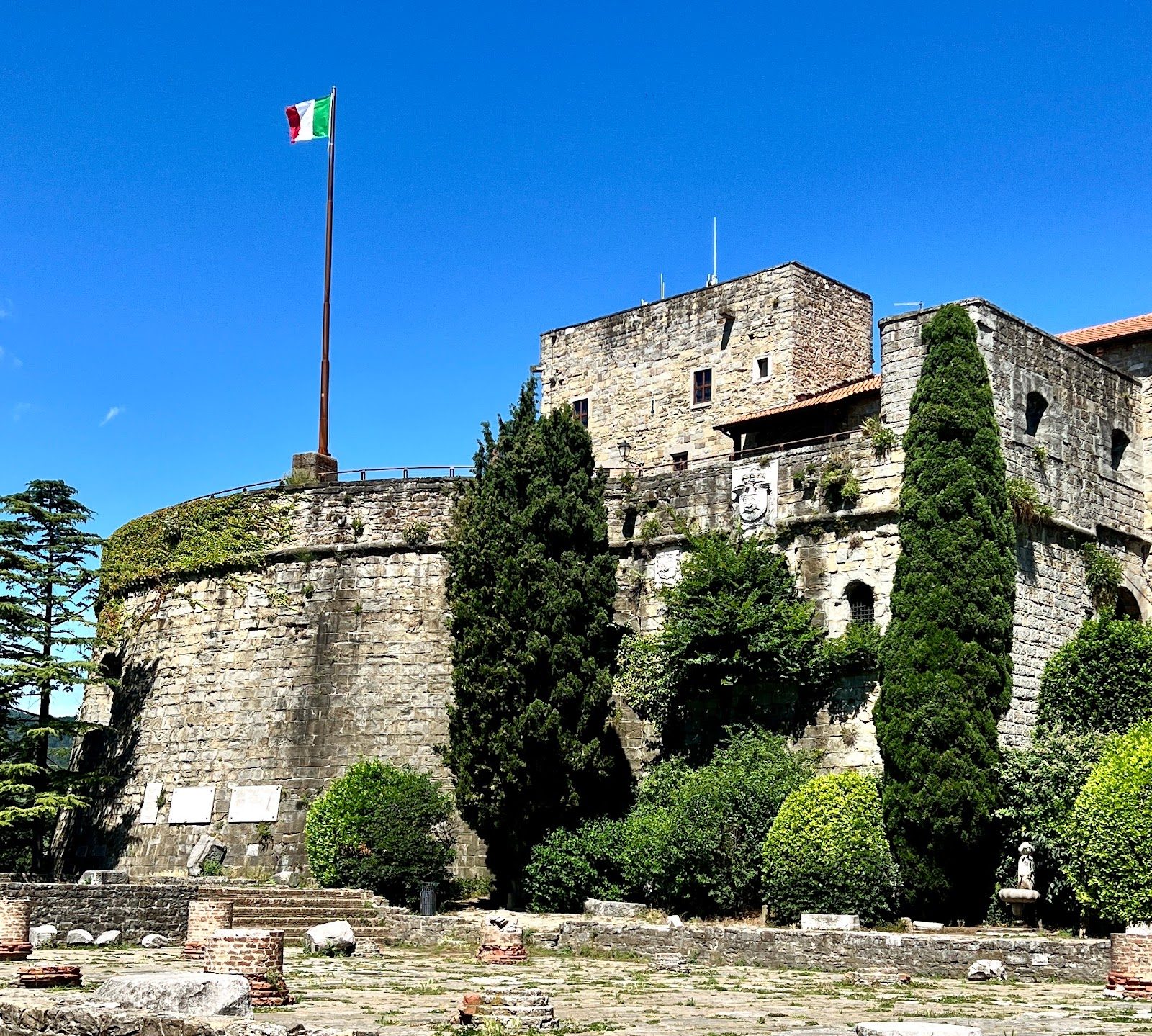
This fortress overlooks the city and houses a museum featuring ancient artifacts and weapons from the region's diverse historical periods.
Access the ramparts for panoramic views of the city rooftops.
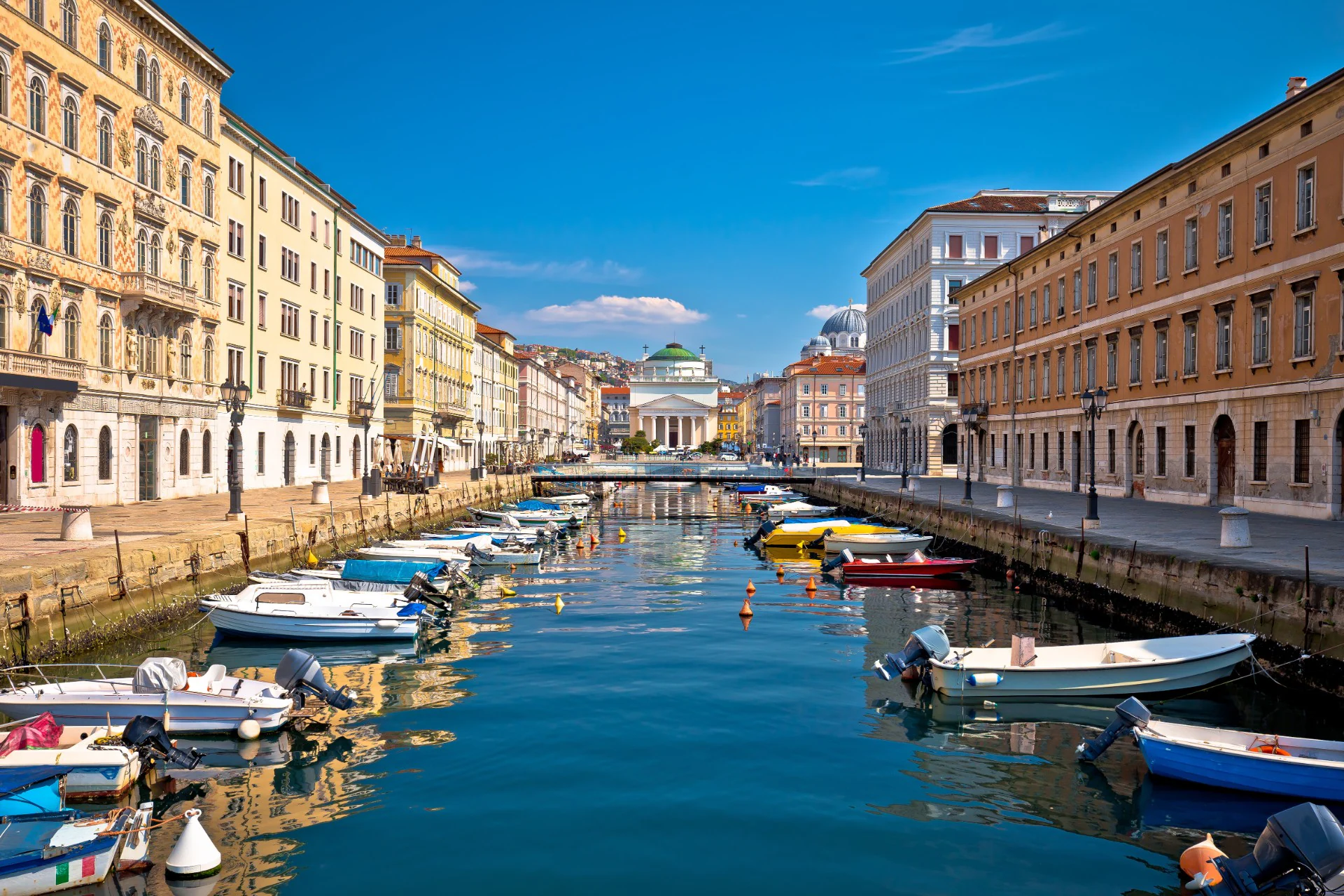
This waterway, once used by merchants to unload goods directly into the city center, remains a focal point surrounded by historic cafes.
Observe the reflection of Saint Anthony the Thaumaturge church.
The best arrival window is 09:00–11:00, which provides optimal light on the bay and avoids midday peak crowds. Planning your visit within this timeframe ensures a manageable pace for both day trippers and overnight guests.
Mild temperatures (15°C–22°C). Pleasant conditions for walking throughout the city.
Warm (25°C–30°C). Humidity increases during mid-afternoon.
Cooler (16°C–23°C). Ideal for harbor-side exploration.
—; Consistent light for photography.
Verdict: For the most balanced experience, visit Tuesday to Thursday between 09:00 and 11:00 during the months of April or October.
Miramare Castle is open daily to visitors, maintaining consistent operating hours throughout the week. This schedule facilitates planning for those evaluating if Trieste is worth visiting.
Trieste and Piran are located approximately 35 kilometers apart across the Italy-Slovenia border. The most practical approach involves regional bus connections or private vehicle transit via the E61 and H5 roads.
Arriva Trieste line to Piran (via Portorož)
E61 and H5 motorway
Direct transfer via border crossings
For those driving, consider that Piran is a restricted-traffic zone; parking is available at the Fornače garage with a shuttle connection to the town center.
Everything you need to know about is trieste worth visiting
Trieste offers a unique blend of Central European and Mediterranean history, making it a compelling destination for those staying on the Slovenian Coast. Determining if is trieste worth visiting depends on your interest in architectural diversity and cafe culture. The city provides a distinct change of pace from coastal resort towns.
Visitors often head to the Piazza Unità d’Italia and the Miramare Castle to experience the grandeur of the city. Exploring these Trieste landmarks reveals the imperial legacy of the Austro-Hungarian era. Most visitors find that assessing if is trieste worth visiting includes dedicating time to these historic sites.
The entrance fee is 17 EUR for full price entry to the museum and exhibition. This fee provides access to the historic rooms and the surrounding park facilities. Understanding the costs helps clarify if is trieste worth visiting for your travel budget.
The best arrival window is 09:00–11:00. Arriving during these hours allows you to capture the early morning light on the bay while avoiding midday peak crowds. This timing is essential for a smooth visit to the castle grounds.
The museum is open daily from 09:00–19:00. These consistent opening hours make it easy to plan your schedule regardless of which day you choose to travel. Always verify your entry time to ensure you have enough time for the full collection.
Travelers often find that crossing the border is straightforward when planning a Trieste city tour. Whether you drive or use local transit, the proximity makes it a practical addition to an itinerary. You will quickly discover if is trieste worth visiting once you see the ease of travel between regions.
The city serves as a bridge between cultures, offering a sophisticated alternative to typical beach destinations. By looking beyond the coast, you can better decide if is trieste worth visiting for a deeper cultural experience. The fusion of maritime heritage and refined urban planning defines the appeal of this port city.
Guided Day Tours to Piran
Read more GuideHow to Get from Trieste to Piran
Read more GuideTaking the Bus from Trieste to Piran
Read more GuideTrieste 3-Day Itinerary Planning
Read more GuideTrieste to Piran Ferry Guide & Timetable
Read more Tickets & toursPrivate Transfers & Taxis from Trieste to Piran
Read more