
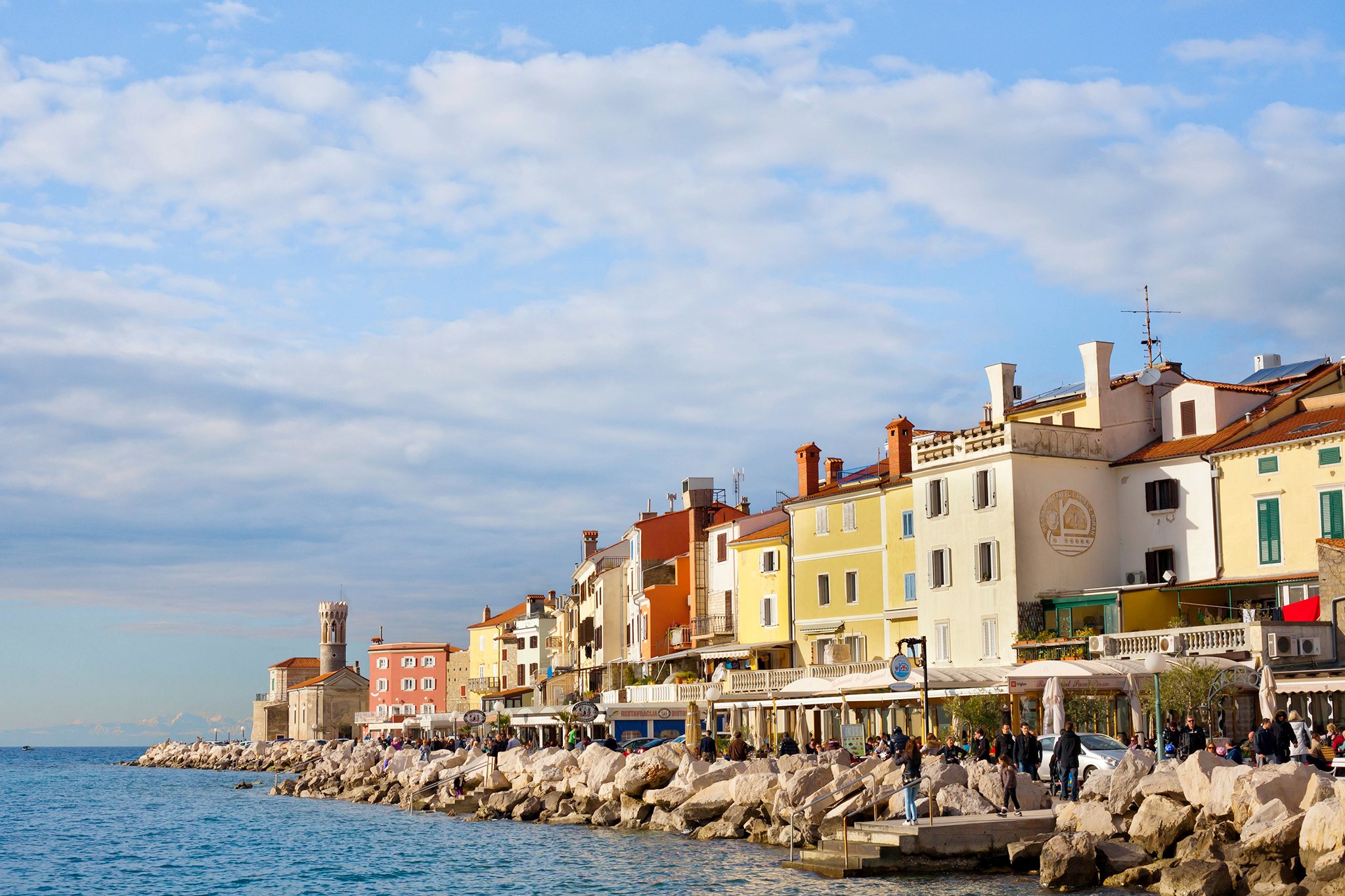
6 hr
Slovenian Coast & Piran Discovery from Trieste
Explore Piran's Venetian charm, coastal villages, and salt flats with local wine and food tasting
Reserve
Hand-picked by our editors — only the best 5 experiences from 18 reviewed.
Verified partners for every tour, free cancellation where available, and instant confirmation on every booking.
6 hr
Explore Piran's Venetian charm, coastal villages, and salt flats with local wine and food tasting
Reserve
5 hr 30 min
Explore coastal gems from Koper to Piran, with wine and prosciutto tasting by the Adriatic
Reserve
5 hr 30 min
Discover a stunning Adriatic seaside gem and taste local wines amid rolling hillside vineyards
ReservePrices from verified partners. Availability updates in real time at checkout. Free cancellation policies apply where shown.
The landmarks, rooms, and views travelers on this tour remember — all visible on a single visit.
The best-preserved tower offering panoramic views of the Adriatic Sea and Piran.
One of the oldest surviving entrances to the town, dating back to the 13th century.
A 15th-century Gothic gate featuring a coat of arms with three dolphins.
A historic gateway located near the iconic St. George's Parish Church.
The most extensive section of the medieval walls, perfect for walking the battlements.
Organized excursions offer stress-free logistics, while independent travel provides superior freedom to explore the Slovenian Coast at your own pace.
| Feature | Top pick Guided Tour | Independent Travel |
|---|---|---|
Logistical ease |
All details handled by operator | Requires self-managed navigation |
Flexibility |
Fixed departure and itinerary | Complete control over schedule |
Cost efficiency |
Higher cost per person | Lower expense for groups |
Language barriers |
Multilingual guides provided | Reliance on local signage |
Total transit time |
Approximately 1.5 to 2 hours | 1.5 to 3 hours depending on route |
| See tickets → |
Verdict: Those prioritizing comfort for their trieste to piran tour should choose guided trieste to piran tour tours, while travelers seeking autonomy may prefer arranging their own trieste to piran tour tickets or driving privately.
Choose your ticket, select your date, and reserve in under two minutes. Secure checkout handled by our verified partner.
Instant confirmation by email, with a mobile voucher you can save offline. No printing, no queuing at a collection desk.
Arrive at the entrance, show your voucher on your phone, and walk in. Most tickets include priority or skip-the-line access.
Practical details for your visit straight from our verified partners — hours, access, rules, and how to get there.
Casual attire is recommended. Wear sturdy, non-slip footwear as the historic stone surfaces on the trieste to piran tour are uneven.
Large bags are not permitted due to the narrow passageways of the Piran City Walls. Security checkpoints may be present.
Photography is permitted and encouraged throughout the Piran City Walls. The Tavčar Tower offers the best views for your trieste to piran tour photography.
Access is difficult for those with limited mobility due to steep, irregular stairs. This part of your trieste to piran tour is not wheelchair accessible.
Families are welcome, though children should be supervised on the walls. Entry is free for children under 12, adding value to your trieste to piran tour.
Food and drink are not available inside the walls. Bring water, as the climb during your trieste to piran tour can be strenuous in the summer heat.
Best time to go, insider tips, nearby landmarks, and the cancellation fine print — flip through to skim what matters to you.
Flexible, no hidden fees.
The Piran City Walls operate with flexible entry. The 4 EUR adult entrance fee is non-refundable once the turnstile is activated.
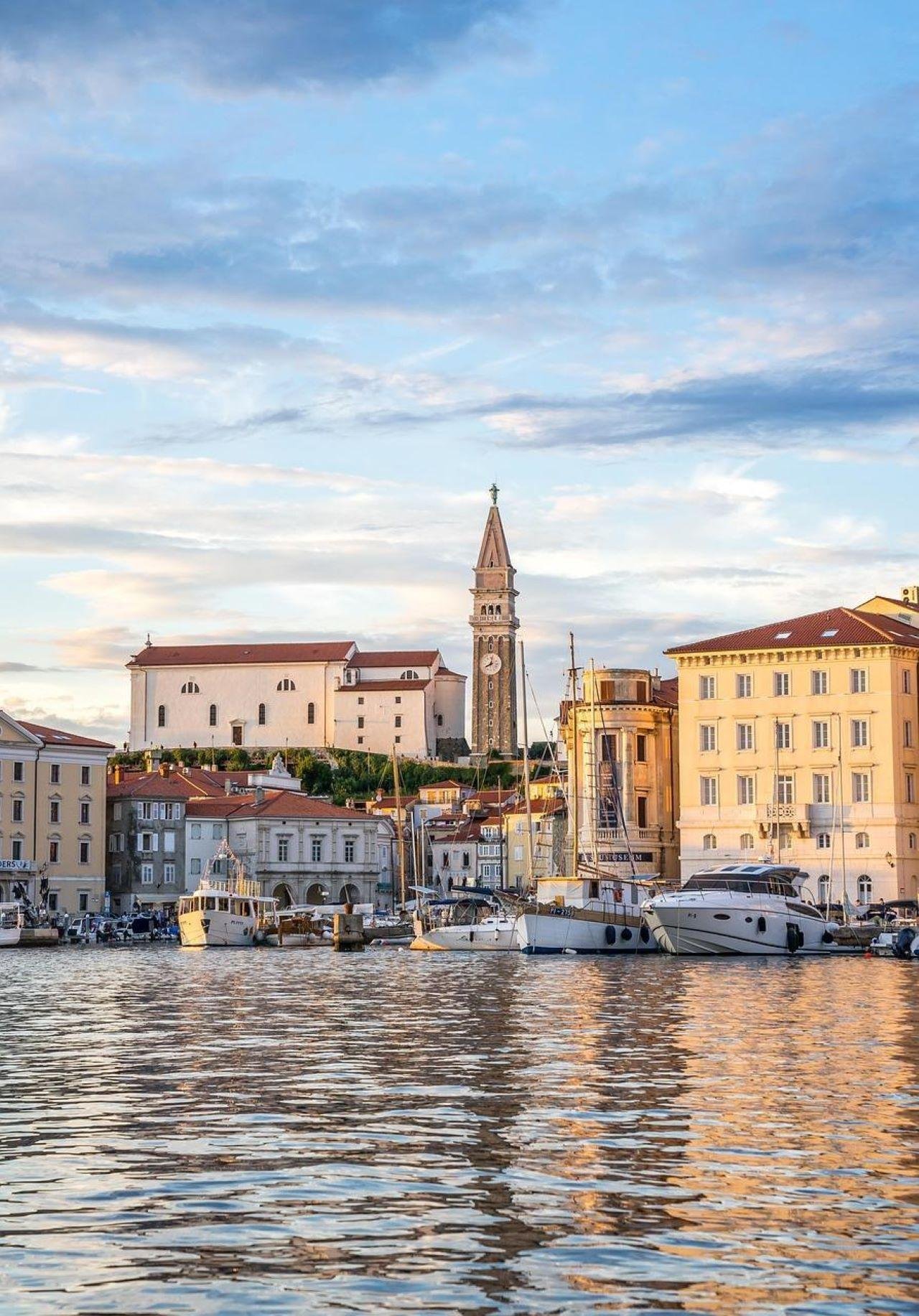
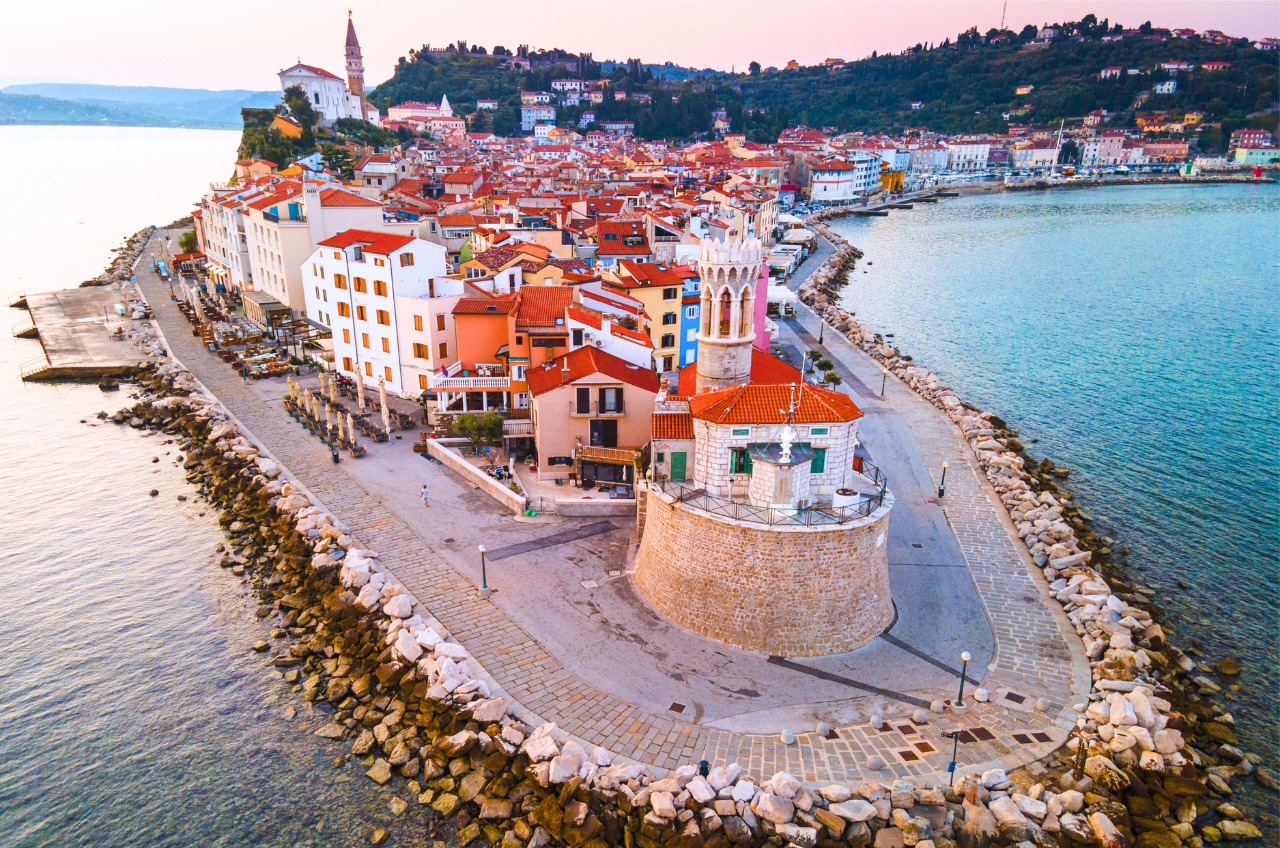
The 47-kilometer stretch of Slovenian coastline between Trieste and Piran represents one of Europe's shortest maritime facades, yet its density of history rivals any Adriatic rival. Piran itself occupies a narrow peninsula that juts into the Gulf of Trieste, its Venetian Gothic architecture compressed into a labyrinth of alleyways barely three streets wide. The town's outer walls, completed in the 15th century to defend against Ottoman incursions, remain largely intact along the ridgeline that overlooks Tartini Square and the harbor. Salt production in the adjacent Sečovlje Salina Nature Park has continued without interruption since the 14th century, using wooden tools and centuries-old evaporation basins that still yield sea salt harvested by hand. The region changed hands seventeen times between 1279 and 1991. Venetian rule lasted five centuries, leaving behind the Palazzo Comunale, the Cathedral of St. George, and a dialect that blends Italian and Slovene in equal measure. Austrian control from 1797 reshaped Portorož into a spa destination, while Yugoslav governance after 1947 industrialized the hinterland and fortified the coast. Slovenia's independence in 1991 returned Piran to its historic role as a maritime crossroads, and today the Old Town remains one of the best-preserved Venetian urban cores outside Italy itself. A Trieste to Piran tour typically follows the coastal road through Muggia, Koper, and Izola before reaching the peninsula. The route passes terraced vineyards that produce Refošk and Malvasia, both indigenous varietals suited to the karst limestone subsoil. The town's Bell Tower, modeled after Venice's Campanile di San Marco, rises 46 meters above the peninsula and offers sightlines across the entire bay. Below, the waterfront promenade traces the original 13th-century quay, now lined with taverns serving brancin and orada pulled from local nets. The city walls climb steeply from sea level to 46 meters, enclosing fewer than 4,000 permanent residents within a medieval footprint that has barely expanded since 1600. Trieste to Piran tours remain the most direct way to experience this Adriatic fragment, where Italian syntax meets Slavic place names and every alley ends in stone steps descending to the Adriatic.
"The town's outer walls remain largely intact along the ridgeline that overlooks Tartini Square and the harbor."
A step-by-step walkthrough of the visit — what you'll see, how long each stage takes, and the details that matter.
You depart Trieste mid-morning, crossing the Italian-Slovenian border at Villa Opicina, where the karst plateau begins its descent toward the sea. The road hugs the coastline through Muggia and Koper, passing limestone cliffs striped with centuries of quarrying. Thirty minutes in, you reach the Sečovlje salt pans, where wooden rakes and wheelbarrows rest against crystallized basins that have been worked since medieval times. Your guide explains the traditional harvesting cycle: spring flooding, summer evaporation, autumn crystallization. The air smells of brine and sun-warmed mud. By noon you enter Piran's Old Town on foot, the bus unable to navigate alleys built for donkey carts. You climb the stone steps to the city walls, pausing at the seventh-century fortifications that frame views of Trieste's harbor across the bay. Below, Tartini Square spreads in an oval where fishing boats once dried their nets. You descend to the Cathedral of St. George, its Baroque facade rebuilt in 1637 after an earthquake, then walk the harborfront promenade where brancin and squid hang in tavern windows. Most tours include a tasting at a family-run vineyard in the Istrian hills above Portorož, where Refošk and Malvasia are poured alongside local cheeses. You return to Trieste by late afternoon, the Adriatic light turning amber over the peninsula's terracotta roofs.
The Piran City Walls are open daily from 08:00–20:00.
The adult entrance fee for the Piran City Walls is 4 EUR.
Due to steep, irregular stairs and narrow paths, the walls are unfortunately not accessible for those with reduced mobility.
No, pets are strictly prohibited inside the Piran City Walls for hygiene and safety reasons.
We recommend arriving between 08:00–10:00 to avoid crowds and heat during your trieste to piran tour.
Tickets are purchased directly at the turnstile for the Piran City Walls; no advance booking is required.
Nearby landmarks include the historic Tartini Square and the St. George's Parish Church.
No specific dress code applies, but comfortable, sturdy shoes are essential for the uneven stone stairs.
Yes, you are encouraged to take photos throughout your walk on the walls.