
English| EUR
Suggested for you
More currencies
Choose a language
The 30-kilometer journey between Trieste and Piran crosses an international border but remains one of the Adriatic's most straightforward coastal connections. Three transport modes serve the route year-round, each with distinct timing and border procedures. This guide maps the practical mechanics of each option.
Quick answer
Piran lies 30 kilometers south of Trieste across the Italy-Slovenia border. Direct buses depart Trieste's central station for Piran and Portorož seven times daily, taking 60 to 75 minutes including the border crossing. Driving the route via the coastal road takes 45 minutes in light traffic, though Piran's vehicle restrictions require parking at designated lots outside the old town. Seasonal ferries connect the two ports between May and September, offering a 90-minute Adriatic crossing.
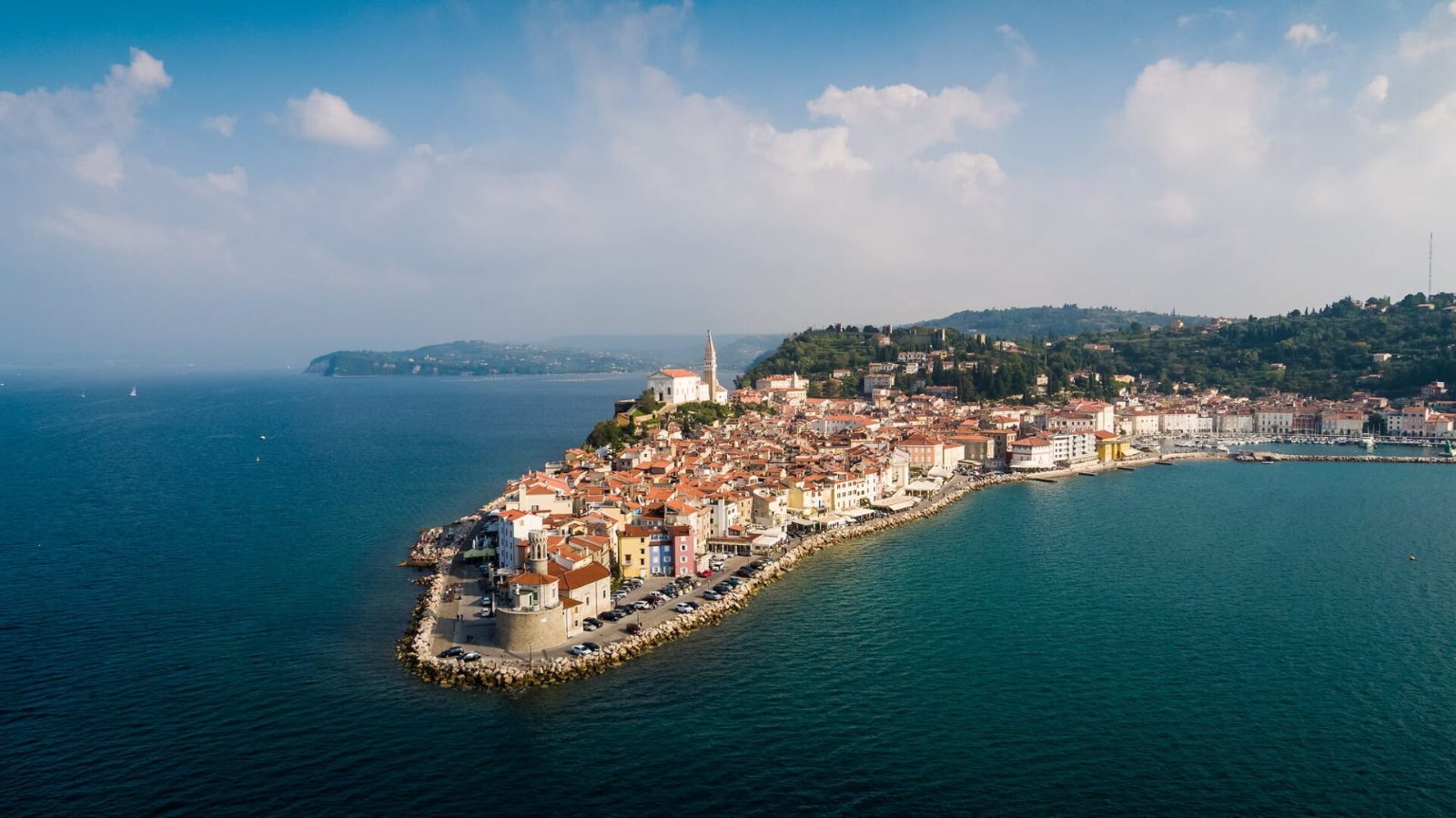
The Adriatic coastline narrows to a 30-kilometer corridor between Trieste and Piran, compressed between the Karst Plateau and the Gulf of Trieste. Two nations, three alphabets, and a millennia-old Venetian architectural thread link the Italian port city to the Slovenian peninsula. The border itself, once a Cold War friction point, dissolved into the Schengen zone in 2007, leaving only a road sign and a change in pavement to mark the crossing. Traveling from Trieste to Piran requires navigating this border crossing by bus, car, or seasonal ferry. The most reliable year-round option is the direct bus service operated by Arriva Slovenia, departing from Trieste's main bus terminal on Piazza della Libertà. Departures run seven times daily, with the first bus leaving at 06:45 and the last at 19:30. The journey follows the coastal highway through Muggia, crosses at the Lazaret border point, and continues through Koper before reaching Portorož and Piran. Tickets cost approximately 6 to 8 EUR and can be purchased at the terminal or directly from the driver. Border checks are typically brief, though travelers must carry valid identification. Driving the route offers flexibility but introduces logistical constraints at the destination. The coastal road via Lazaret and Sečovlje is the most scenic, threading through salt pans and fishing villages. Traffic thickens during summer weekends, particularly between July and August, when the journey can stretch to 90 minutes. Piran's historic core is a vehicle-restricted zone enforced year-round. Parking is available at three designated lots outside the old town walls, with rates ranging from 1.50 to 3 EUR per hour depending on the season. The walk from the nearest lot to Tartini Square takes approximately ten minutes. Seasonal ferry service between Trieste's Porto Vecchio and Piran operates from late May through September, weather permitting. The crossing takes 90 minutes and offers views of the Gulf's littoral architecture, but schedules are limited to two or three departures per week. The ferry docks at Piran's main pier, eliminating the parking problem but tethering departure times to the timetable. Advance booking is recommended during peak summer months, as capacity is restricted. Border formalities remain minimal within the Schengen framework, but non-EU travelers should verify visa requirements before departure. Slovenia uses the euro, matching Italy's currency, which simplifies budgeting. The best arrival window in Piran is between 08:00 and 10:00, before midday heat settles over the limestone streets and parking availability drops. Piran itself is free to enter, though transport costs and parking fees apply depending on the chosen route.
“The border itself, once a Cold War friction point, dissolved into the Schengen zone in 2007, leaving only a road sign and a change in pavement to mark the crossing.”
Piran is situated on the Slovenian Coast, accessible from Trieste via international bus routes, seasonal ferry connections, or private vehicle. Travelers should plan their route based on the specific transit hub and current seasonal availability.
Trieste Autostazione to Piran Avtobusna Postaja
E61 and H5 via Škofije border crossing
Trieste Molo Audace to Piran Harbour (Seasonal)
Piran operates a restricted vehicle zone, so private vehicles must be parked in designated garages like Fornače, from which a shuttle bus connects to the town center. Arriving between 08:00–10:00 helps avoid peak congestion in these parking areas.
The best arrival window for your trip from Trieste to Piran is 08:00–10:00. Arriving during this period helps you avoid mid-day heat and peak parking congestion in Piran's restricted vehicle zone.
Mild temperatures (15°C–22°C)
Pleasant weather for walking the coastal paths and exploring Piran's narrow streets before the peak summer heat arrives.
Warm temperatures (25°C–30°C)
Expect heavy pedestrian traffic and higher temperatures; arriving early is essential to secure parking.
—
Visiting on a weekday morning provides the calmest experience and the most consistent access to parking zones near the town center.
Verdict: The best time to arrive is between 08:00–10:00 on a Tuesday, Wednesday, or Thursday during the months of May, June, or September.
Piran remains accessible to visitors throughout the week, as the town is a public destination without gated entry. While public spaces are open daily, visitors should note that individual business and service hours within the town may vary.
Prepare these essentials before traveling from Trieste to Piran to ensure a smooth cross-border journey.
Everything you need to know about how to get from trieste to piran
You can travel between these two coastal destinations by bus, ferry, or private vehicle. Each method offers a different perspective of the Adriatic landscape along the route.
Many visitors find that regional bus services provide a reliable way to connect these cities. Exploring how to get from Trieste to Piran by road allows you to see the changing Mediterranean scenery.
Yes, seasonal bus lines and ferries operate between the two cities. You should check the current schedules to plan your transit effectively as you determine how to get from Trieste to Piran.
We advise travelers to arrive between 08:00 and 10:00 to avoid mid-day heat. This window also helps you bypass peak parking congestion in the town's restricted access zones.
While you can drive to the vicinity, Piran features a restricted vehicle zone in the historic center. If you are researching how to get from Trieste to Piran, plan to use the designated parking facilities located outside the city walls.
There is an entrance fee of 0 EUR to enter the town itself. Please note that while the site is free, you must budget for your chosen mode of transport.
Piran operates a strict traffic management system to preserve its historic character. Most private vehicles must remain at the perimeter, requiring a short walk or shuttle transfer to reach the central landmarks.
Guided Day Tours to Piran
Read more GuideTaking the Bus from Trieste to Piran
Read more GuideIs Trieste Worth Visiting?
Read more GuideTrieste 3-Day Itinerary Planning
Read more GuideTrieste to Piran Ferry Guide & Timetable
Read more Tickets & toursPrivate Transfers & Taxis from Trieste to Piran
Read more